
New Romantics
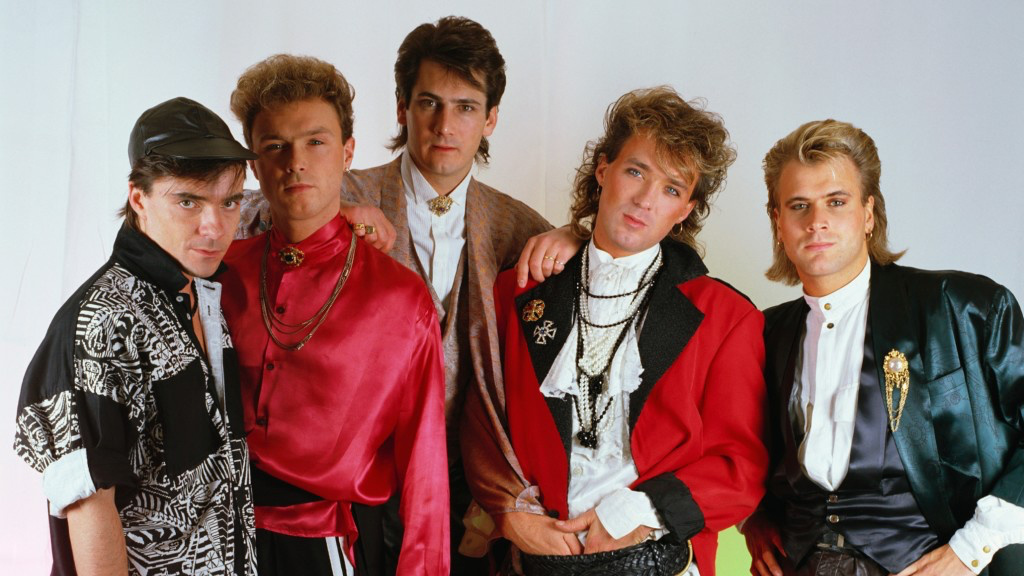
New romanticism emerged in the UK music scene in the early 80s as a direct backlash against the austerity of the punk movement. At various times it became a catch-all term for quite disparate bands working within the pop world, and consequently works better as a description of a specific time rather than sound or style. Where punk railed against life on England’s council estates, the new romantics celebrated glamour; ostentatious clothes and hedonism.The coming of age of the video as a promotional tool was important to the development of new romanticism as were the outlandish haircuts (A Flock of Seagulls ) the frilled shirts (Duran Duran, Spandau Ballet) and the fact that men could be seen wearing mascara (practically everyone involved). Guitars, though present, were subordinate to synthesizers.
The movement’s early fulcrum was Stevo (Steven Pearse), whose Some Bizzare Album compilation in 1980 introduced such artists as Classix Nouveaux, Blancmange, Depeche Mode and Soft Cell. Centred on London clubs such as Blitz, this new gaggle of groups was at first termed ‘futuristic’. The Human League had been active for some time in Sheffield but in a new incarnation perfectly amalgamated simple song ideas with basic keyboard skifis to define the essential new romantic blueprint. Adam And The Ants were historically linked with punk, as were, more obliquely, Culture Club, though both found a place on the fringe of the movement as a platform for major chart success.
If the most obvious historical ancestor of new romanticism was David Bowie, then Japan were his closest living relatives, aping even his fascination with the Orient. The two biggest stars were undoubtedly Duran Duran and Spandau Ballet. The former wrote classic pop hooks with casual ease for much of the period, though Spandau Ballet were always more visually than aurally appealing, despite the occasional winning single (the melodrama of ‘True’ was resonant enough for PM Dawn to make it rap’s first new romantic sample). Of less enduring fame or substance were Classix Nouveaux, Visage and A Flock Of Seagulls, despite the latter breaking through in the American market. Nevertheless, several exceptional singles were left behind that effectively defined the times, and it was to no great surprise that the movement was revisited in 1995 with the development of the ‘Romo’ scene.
A list of New Romantic albums can be found HERE
Text taken from The Virgin Encylopedia of Eighties Music.

Comments
This post currently has no comments.